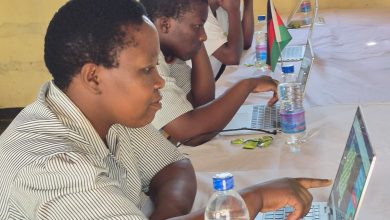
Department of Human Resource Management and Development says the recently concluded civil service staff audit launched last December has exposed several personnel and payroll discrepancies requiring attention.
The department’s spokesperson Kennie Mtonga said in an interview yesterday that some of the discrepancies were resolved immediately while others were referred to relevant offices for further investigation.
“Some findings, including issues of receiving a higher or lower salary were being sorted there and then,” he said.
Mtonga also confirmed that audit teams have returned to district councils to verify employees who were missed in the initial exercise.
He said the repeat verification followed requests from affected employees and concerns raised by traditional leaders.
Said Mtonga: “After completing the task, we received requests for a repetition from some officers, saying they had missed the exercise due to various reasons.
instantly addressed. | Nation
“There was also an outcry from many traditional leaders regarding the same; hence, it was agreed that teams should return to the councils.”
He said those who missed the repeat visits will be required to travel to Lilongwe to finalise the process.
But Mtonga said at this point it is yet to be seen if there are some ghost workers in the government ministries, departments and agencies (MDAs) assessed.
In a separate interview, Office of the President and Cabinet (OPC) director of communications Focus Maganga said release of the findings of the comprehensive public service audit will await conclusion of processes at OPC.
“Once the remaining processes have been concluded, government will furnish the nation with the full findings,” he said.
Maganga said the exercise was not merely a statistical audit of the public service establishment, but a governance reform aimed at strengthening accountability, improving efficiency and ensuring prudent management of public resources.
He said: “The public should be assured that this is not an exercise being undertaken for purposes of statistics alone; it is a critical governance reform aimed at ensuring that the public service is properly accounted for and that taxpayers’ resources are protected.”
Maganga said government will produce a thorough, transparent and detailed report highlighting evidence of ghost workers, payroll irregularities, corrective action and potential savings.
Reacting to the developments, National Advocacy Platform chairperson Benedicto Kondowe said the delay in releasing the findings was concerning, although he acknowledged that a comprehensive verification exercise required accuracy and fairness.
“The delay raises legitimate concerns about the efficiency, transparency and urgency of the exercise, particularly because it involves significant public resources and the integrity of the payroll system,” he said, urging government to provide clear timelines and regular updates to maintain public confidence.
Kondowe described existence of ghost workers as a symptom of weak systems and said the bigger challenge was ensuring that the public service remained affordable, efficient and aligned with national priorities.
Centre for Social Accountability and Transparency executive director Willy Kambwandira said the prolonged delay in releasing the findings risked undermining public confidence and raising questions about government’s commitment to payroll reforms.
“Ghost workers alone cannot explain a 234 percent rise in the wage bill. Government must also confront broader drivers such as unchecked recruitment, promotions, remuneration structures and the overall size of the public service,” he said.
Kambwandira asked government to replace periodic payroll clean-ups with permanent controls, including continuous reconciliation of the Human Resource Management Information System and payroll, biometric verification, independent audits and stronger accountability for officials facilitating irregularities.
The audit was launched amid a moratorium on new recruitments except for key sectors that were to be approved on a case by case basis.
During the budget presentation in Parliament in February, Minister of Finance, Economic Planning and Decentralisation Joseph Mwanamvekha reported that spending on wages and salaries exceeded the mid-year target of K661.5 billion by K125.9 billion.
The minister said as a result, the 2025/26 fiscal year wage bill increased by K98.5 billion, from K1.53 trillion to K1.63 trillion.
Supported by the World Bank and European Union, the audit was launched in December 2025 against the backdrop of a sharp rise in the public wage bill, which increased from K479.6 billion in the 2021/22 financial year to a projected K1.6 trillion in 2025/26, a 234 percent increase over four fiscal cycles.
Chief Secretary to the Government Justin Saidi is on record as having stated that the audit was intended to eliminate ghost workers and fraudulent payroll entries, biometrically verify every public employee, modernise and integrate payroll and human resource systems and establish lasting accountability over public salary expenditure.